
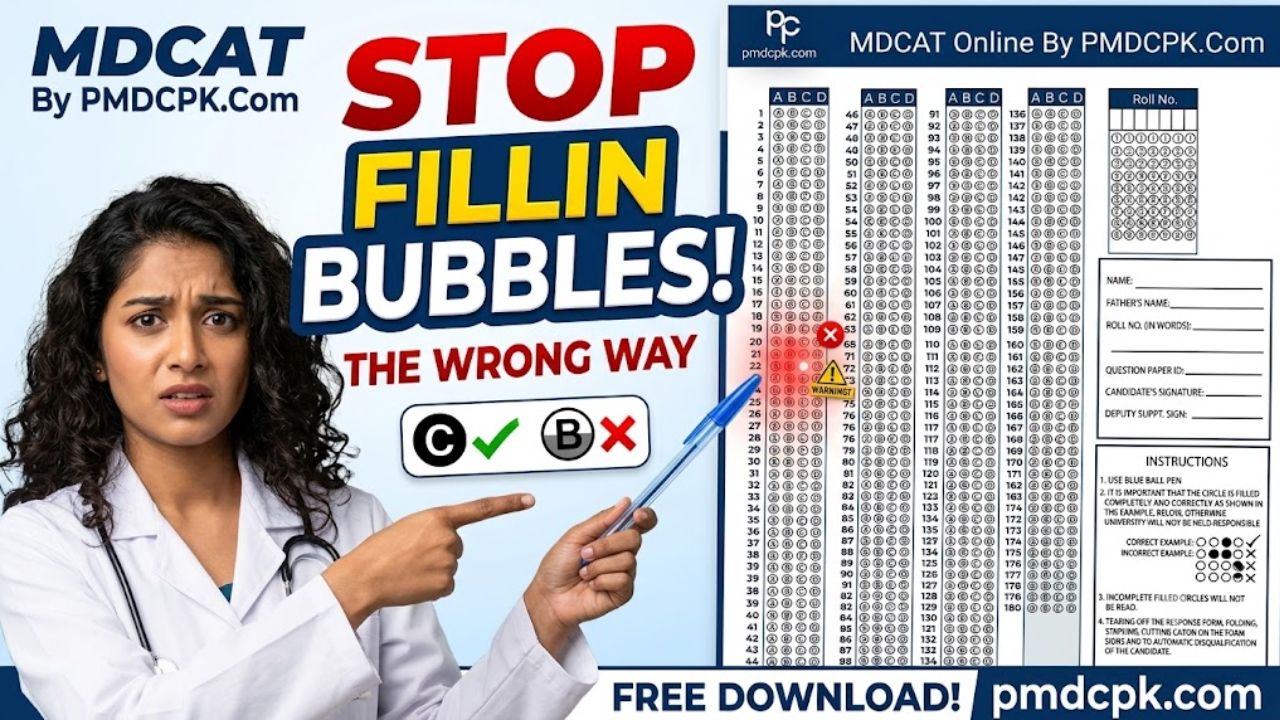
Preparing for the Medical and Dental College Admission Test (MDCAT) involves much more than just memorizing biology diagrams, chemical equations, and physics formulas. There is a silent, high-stakes element of the exam that can make or break your score: the bubble sheet.
Every year, thousands of brilliant students lose precious marks not because they didn’t know the correct answer, but because they made simple, preventable mistakes while filling out their response forms. A misplaced bubble, a smudge of ink, or a misaligned row can instantly invalidate your hard work.
To help you eliminate exam-day anxiety and perfect your shifting speed, we have designed a high-quality, exact-format 180 MCQs MDCAT Bubble Sheet PDF available for free download below.
Why Practice with a Real 180 MCQs Bubble Sheet [OMR] Format?
The actual entrance test relies on Optical Mark Recognition (OMR) software to scan and grade your answers. This computerized system does not understand human intent—it only reads contrast. If a circle is half-filled, crossed out, or poorly marked, the computer simply skips it or marks it incorrect.
Practicing with the identical layout you will encounter on exam day offers distinct advantages:
- Flawless Time Management: Solving 180 multiple-choice questions is a race against the clock. Shifting your eyes from the question paper to the response sheet takes physical time. Regular practice helps you develop a rhythmic pace.
- Preventing the “Offset Indexing” Disaster: This happens when a student skips a difficult question (e.g., Question 25) but accidentally fills the answer for Question 26 into the bubble for 25. This shifts every subsequent answer out of alignment, ruining the entire section.
- Building Muscle Memory: Holding a ballpoint pen and smoothly darkening a perfect circle within seconds requires a mechanical skill set that only repetitive practice can build.
Download Your Free HD MDCAT Bubble Sheet PDF
Click the link below to view and download the high-resolution, printable PDF file. It is optimized specifically for standard A4 size paper, matching the dimension of official examination papers.
Anatomy of the Premium MDCAT Bubble Sheet Layout
Our custom-designed response sheet replicates the exact layout of modern entrance test patterns to ensure your practice remains realistic.
| Section Block | Component Details | Purpose & System Compliance |
| Top Header Bar | MDCAT Online By PMDCPK.Com | Features official-style alignment with clear, legible text formatting. |
| Roll Number Matrix | Grid layout with vertical digit columns | Trains your ability to shade your precise identification code without errors. |
| Personal Info Block | Name, Father’s Name, Question Paper ID, Signatures | Replicates the identical verification tracking boxes used by invigilators. |
| Response Columns | 4 structured vertical columns ranging from 1 to 180 | Groups your items cleanly to mimic authentic time-trial exams. |
Step-by-Step Guide to Filling Out Your Response Form Properly
To ensure your practice runs match actual testing criteria, follow this professional step-by-step procedure when working through your mock papers:
1. Fill Out the Identification Matrix First
Before looking at the question paper, carefully print your name, father’s name, and your specific roll number in the boxed slots. When filling out the Roll Number grid, write the digits in the boxes at the top first, then look down vertically to shade the matching numbered bubble below each digit.
Also Read More About: Active MDCAT WhatsApp Group Links 2026
2. Choose the Correct Tool
Always write and fill your answers using a blue ballpoint pen unless explicitly told otherwise. Avoid gel pens, ink pens, or markers; their wet ink easily bleeds through thin exam paper, creating smudges that cause the OMR scanner to reject your response sheet completely.
3. Implement a Strategic Shifting Routine
Do not try to solve a single question and immediately shade its corresponding bubble. This constant back-and-forth movement breaks your cognitive focus and increases your chances of row misalignment. Instead, adopt one of these proven pacing methods:
- The Page-by-Page Method: Solve an entire page of questions directly inside your exam booklet, circle your chosen options there, and then shift those answers onto your bubble sheet all at once.
- The Subject Block Method: Complete the entire Biology block first, transfer those answers cleanly to your sheet, and then move on to Chemistry or Physics.
Common Mistakes to Avoid (OMR Troubleshooting)
Understanding how the grading scanner reads your paper is the best way to prevent accidental mark deductions.
[ CORRECT ]      ●  ○  ○  ○   (Perfectly shaded solid circle)
[ INCORRECT ]    ◐  ○  ○  ○   (Half-filled; unrecognized by scanner)
[ INCORRECT ]    ✔  ○  ○  ○   (Tick marks are completely ignored)
[ INCORRECT ]    ✘  ○  ○  ○   (Crosses fail to block out backlighting)
[ INCORRECT ]    ●  ●  ○  ○   (Double shading automatically invalidates item)
- Double Shading: If you realize you marked “A” but the correct answer was actually “C”, do not shade both. The OMR computer automatically detects multiple dark spots in a single row and registers a flat zero for that question.
- Stray Pencil or Ink Marks: Keep your document pristine. Do not use your response form as scrap paper for physics or chemistry rough calculations. Any random ink dashes or pencil smudges outside the designated blocks can disrupt the alignment lines used by the scanner camera.
- Damaging the Tracking Edges: Notice the solid dark rectangles running down the sides of professional test sheets? Those are calibration marks. Folding, stapling, or crinkling the corners of your paper prevents the computer scanner from reading your document properly.
Final:
Achieving your medical seat requires a mix of deep academic knowledge and pristine execution. Treat every mock exam and practice paper with the same strict care you would use on your actual exam day. Download our free printable sheet, print a few dozen copies, and integrate them into your weekly time-trial routines.
By making bubble shifting a natural habit now, you will protect your hard-earned knowledge and step into the examination hall with absolute confidence. Stay focused, practice deliberately, and let your preparation pave the way to your medical career!